




























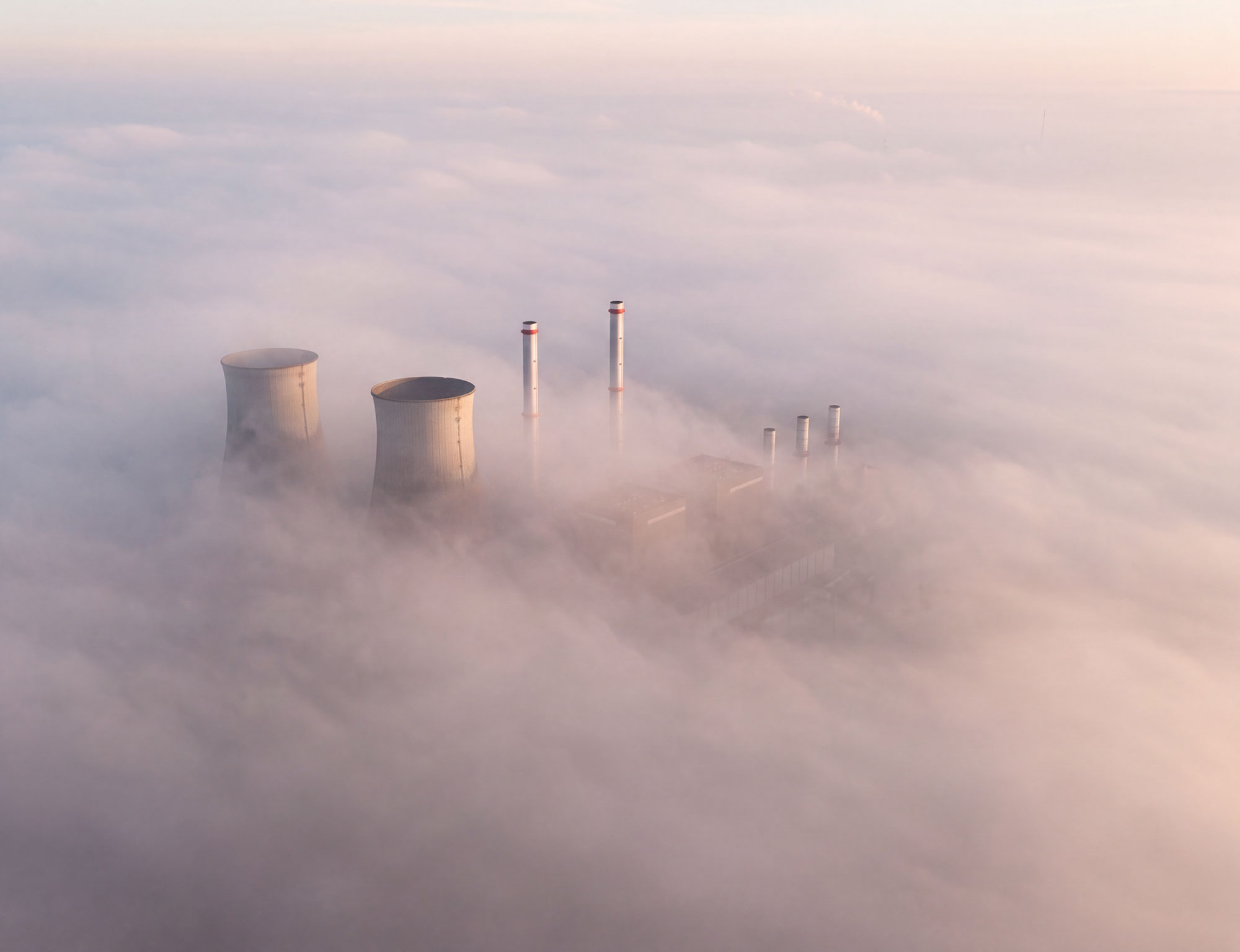
Coastal power plants face a filtration challenge that most filter manufacturers have never truly engineered for.
It is not one problem. It is three – arriving simultaneously.
Salt Air.
Marine environments generate a continuous aerosol of microscopic salt particles suspended in the air. These particles are hygroscopic – they attract and hold moisture. When they land on compressor blade surfaces, they do not just foul the blade profile – they begin a corrosive process that attacks the blade material itself. Salt-induced compressor corrosion is one of the most expensive and underreported maintenance cost drivers in coastal power generation.
Humidity.
The Gulf coastline is one of the most humid environments on earth – particularly during summer months. High relative humidity accelerates the behaviour of salt aerosols, affects filter media performance, and creates conditions where moisture begins to migrate through inadequately specified filtration systems, taking through solubles and washing through dust in the process. A filter media that performs well in dry conditions can become a liability in sustained high-humidity operation.
Fog.
Gulf fog events are sudden, dense, and unforgiving on inlet filtration systems. A fog event can drive the relative humidity at the filter face to near saturation levels within minutes. Filter media that is not water repellent will begin to pass moisture droplets into the inlet ducting. The consequences range from differential pressure spikes to, in worst cases, moisture ingestion, taking through solubles and washing through dust in the process.
Three threats. One inlet system. One chance to get the specification right.
At FAIST we engineer filtration solutions that address all three – simultaneously.
Because on the Gulf coast, you do not get to choose which challenge arrives tonight.
Powering the Future.